We’ve all had a moment when our phone was perfectly fine, but later it begins to slow down, its battery life barely lasting a few hours, and suddenly it shuts down. So we buy a new electronic device again. Most of us might assume that’s just how technology works, and that it’s disposable, but what if it doesn’t need to be like this? What if our devices are built to fail or are designed with an expiration date in mind so that we as the consumers need to buy a replacement for the electronic devices?
We have been conditioned to think that replacing our electronics is normal and harmless, but this cycle is not normal and causes many issues. Behind every electronic device that we buy or replace, other people have paid the price for it. An example of this is children and workers digging for minerals in war-torn countries like the Democratic Republic of the Congo. Furthermore, our communities are being poisoned by the piles of discarded electronics, and we as consumers are wasting our money on products that were never meant to last. Meanwhile, the companies that create these short-lived devices earn billions every year without facing any repercussions or caring about anything that’s happening around them.
Planned obsolescence and disposable electronics are not signs of our progress in society because they are creating unhealthy habits; it’s affecting people in negative ways, and it’s also an unsustainable system that values money over people’s health and the planet. We need to stop this cycle and confront the system that’s in place that’s allowing this, because at the end of the day, humanity and the environment are the ones paying the price because of these corporations’ greed. We must hold tech companies accountable and try to find new ways for sustainable, repairable, and longer-lasting electronics.
The hidden Strategy of Planned Obsolescence
Many tech companies design their products to wear out quickly, using planned obsolescence as a way to make more money.When we think our phones are slowing down naturally, it’s often not by accident; it’s planned. In the article “Designed to Break: Planned Obsolescence as Corporate Environmental Crime,” the authors explain that Apple “argued that intentionally slowing down older iPhones via software updates was necessary to avoid unforeseen shutdowns, even though such a program would disable the utility of a device well before its physical product lifetime” (Bisschop, Hendlin, & Jaspers). This shows us how companies sometimes disguise profit-driven choices as technical fixes so that we wouldn’t suspect anything. By slowing down our phones, Apple made many people believe their devices were too old to use, thus pushing them to buy new ones, even though their phones could have lasted longer. For consumers, it feels like their phone just aged naturally, but in reality they were pushed into replacing something that was still working and that could have lasted if Apple didn’t interfere with their systems. This practice wastes consumers’ money and it also wastes resources.
Another example from the same study explains that when “e-waste is carelessly disposed of or dismantled, the toxic substances it contains (e.g., lead, cadmium, chlorofluorocarbons) can contaminate nearby water, air, and soil”(Bisschop, Hendlin, & Jaspers). This demonstrates how electronic waste doesn’t just disappear after we throw it away because it continues to harm people and nature. Even though these devices connect us globally, their disposal causes pollution in the water and soil in poor communities. Families in poor communities are often the first to suffer from this pollution, even though they had no part in creating the waste. Overall, planned obsolescence might help companies earn more profit, but it leaves the rest of us paying a far greater cost through our money, our health, and the planet we all depend on to live. But the damage caused by planned obsolescence doesn’t stop with consumers or the environment because it starts much earlier, with the people who mine the materials that make our devices.
The Ethical predicament of Electronics because of the lost Lives for Convenience
The global demand for electronics has created unsafe and unfair working conditions for miners who extract materials like cobalt, showing us that technological progress often depends on human suffering. In the article “Understanding Cobalt’s Human Cost” by Amanda Morris, she states, “They found cobalt mining was associated with increases in violence, substance abuse, food and water insecurity, and physical and mental health challenges and community members reported losing communal land, farmland and homes, which miners literally dug up in order to extract cobalt (Amanda Morris).” This shows us that the raw materials in our devices are not found easily because people in the Democratic Republic of the Congo lose their homes and land so that these big companies can have the metals that make phones and batteries. In the DRC, miners breathe toxic air, face polluted water, and struggle to find clean water and food and this will affect their life. All of this suffering happens just so companies gain more money and we can keep upgrading to newer devices every few years. It’s heartbreaking to realize that our convenience often comes from someone else’s pain.
Furthermore another example from the same article explains that “waste generated from mining cobalt and other metals can pollute water, air, and soil, leading to decreased crop yields, contaminated food and water, and respiratory and reproductive health issues,” and miners reported that “working conditions were unsafe, unfair, and stressful, and several workers noted that they feared mineshaft collapses (Amanda Morris).” This highlights to us how miners are not the only ones harmed; their families and communities are also affected. Polluted water and poisoned soil mean fewer crops which leads to hunger, and long-term illness. The Children will also grow up surrounded by toxic dust instead of clean air, while their parents also work in fear of injury or death just to earn enough to survive. And all of this happens because big companies want to keep earning profits and continue producing more electronics, and it doesn’t matter to them the cost of human life. In general, The true cost of our technology is significantly higher than its store price, as it is paid for by people who risk their lives in unsafe mines, communities whose land and water are destroyed, and future generations who will be left with the damage that is left behind.The cost of mining is the physical and moral harm behind our electronic devices and the culture harm to us is the constant replacement of these devices because it shows the psychological and social damage that it created.
The Unseen Dangers of E-Waste like Pollution and Health Risks
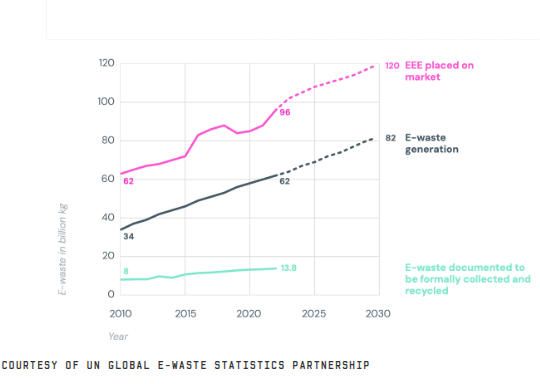
Planned obsolescence doesn’t only harm workers and the environment because it also shapes unhealthy habits for the consumer and it creates social pressure to constantly upgrade our devices. Replacing electronics damages the planet and it also normalizes waste.It’s easy to change an old phone, but we need to think about what happens after we replace our devices. According to the WIRED article ‘The World’s E-Waste Has Reached a Crisis Point’, approximately $62 billion worth of recoverable materials, including iron, copper, and gold, are discarded in e-waste landfills annually, with e-waste expected to increase by 33 percent by 2030 and the recycling rate potentially dropping to 20 percent (Matt Simon).This demonstrates to us that when we give away or throw away our old devices, we waste valuable materials like gold, copper, and iron that could be reused for other things. Most of this e-waste also isn’t recycled, so the metals and chemicals will seep into the ground and pollute the soil and water, which will affect the plants and cause many health problems and pollution for people living near these areas. People have gotten so used to replacing electronics that this waste now feels normal, even though the planet can’t keep up with it and that is not good.
An additional example that shows the social side of this issue comes from LendingTree, in the article “Nearly 30% of Americans Prioritize Buying the Latest Tech, Like iPhone 15, Over Paying Bills.” According to the study, 77% of Americans consider it important to have the latest technology products and gadgets, and 28% of consumers admit they would prioritize buying the latest tech over other financial obligations, such as rent or bills, ahead of Apple’s event unveiling the new iPhone 15, and another 26% go into debt to purchase the latest tech products, at an average of $1,492” (LendingTree, 2023). This reveals to us how much pressure people feel to stay up to date with technology because they don’t want to feel left behind.
Consumer Habits and a need for lasting solutions
Many people also believe they need the newest phone to fit in or feel successful, and advertisements makes it seem like people’s happiness and success depends on having the latest devices but this pressure causes people to spend money on a product they will soon need to replace and it also creates waste and unhealthy habits in people because it teaches people to replace things instead of repairing them. However, some people and companies might argue that constant upgrades are necessary so that we can progress and that newer devices are safer, more efficient, and will help our economy grow and give more people jobs. But progress shouldn’t come at the cost of our well-being or the planet’s health. Real innovation means creating technology that lasts, can be repaired, and doesn’t force people to keep buying. Overall, we need to change how we think about technology, and instead of replacing our devices so often, we should find ways for them to last longer. We should also put laws in place that stop companies from designing products that get damaged easily and require them to create technology that can be repaired and reused or have insurance for these devices so they can be updated without replacing the device. By promoting the idea of repairing our devices and laws to protect us, we can begin changing how consumers and companies view technology and begin to find ways we can still use technology but in a healthy ways.
Addressing the Impact of Disposable Electronics on Society
In conclusion, planned obsolescence and disposable electronics might look like we are progressing as a society, but in reality, we are being pushed backward because of the effects. We’re harming our planet and building unhealthy habits that make waste and overconsumption feel normal even though it shouldn’t. People around the world who are low and middle income, especially children, face the worst effects of e-waste because of their weak systems, e- waste not being recycled, and poor working conditions. No one should have to breathe in toxic fumes or lose their health, or risk their life just so others can keep buying the newest phone. To change this, the government needs to create laws that protect the people and the environment by having protocols or rules that companies need to follow while creating our devices. Companies should be held accountable for the waste that they are producing and for child labor. We also need to educate our communities and health workers about the issues of e-waste by doing a public education campaign.
Switch to your site’s Dashboard to begin building out your site. To go to the dashboard, click the title of this site in the black admin bar at the top of this page.
You must be signed in and added as an Admin user to this site to make changes. Site admins can delete the directions on this page and add their own information by clicking “edit page” in the black admin bar above.

